




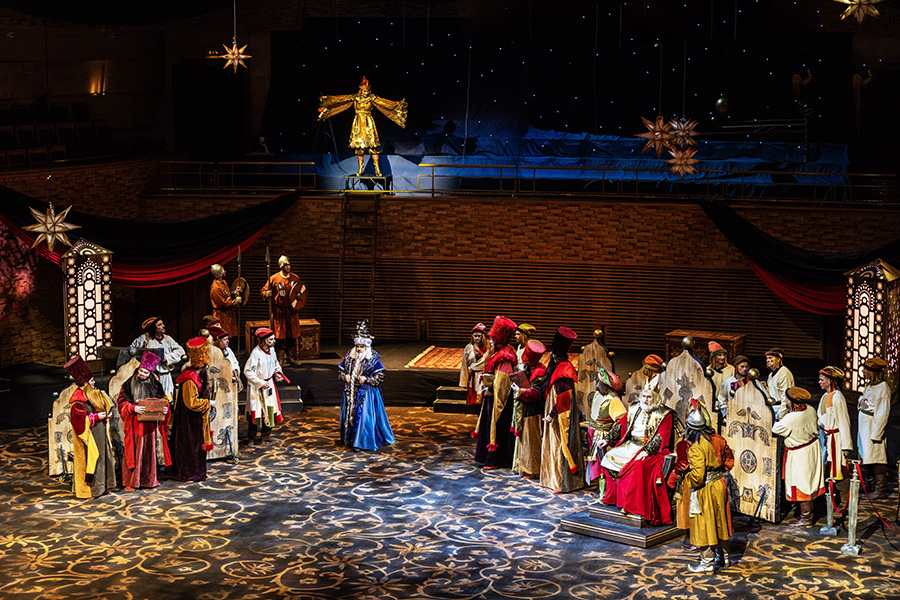
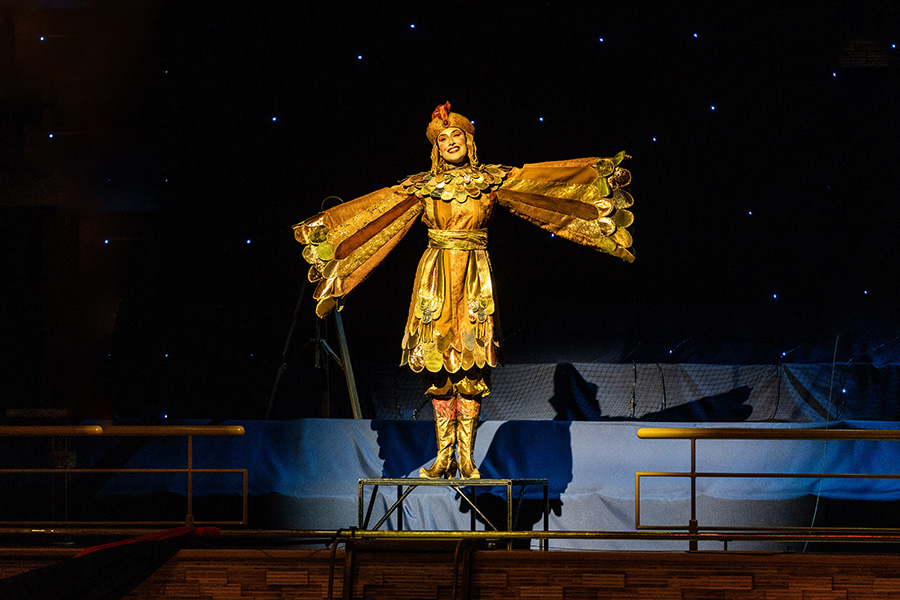
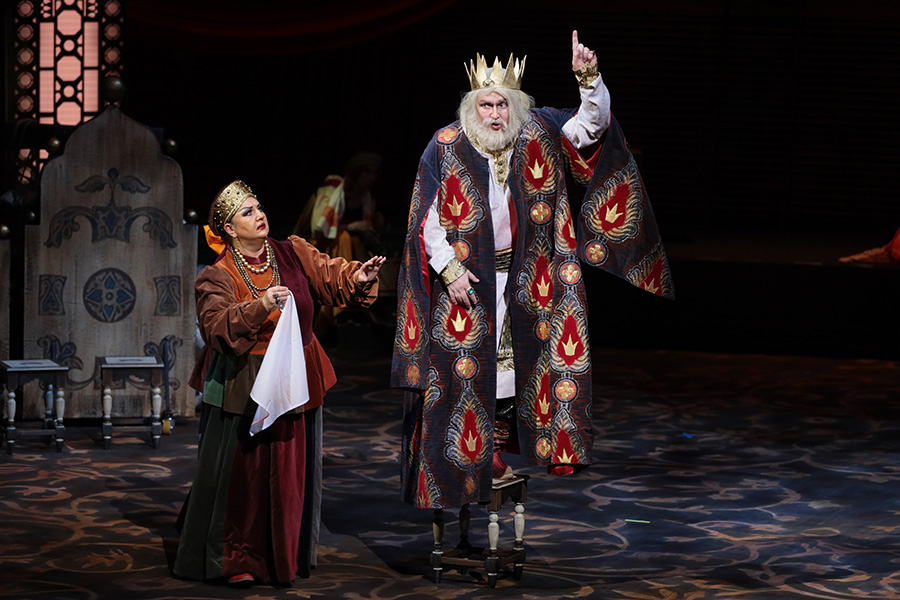
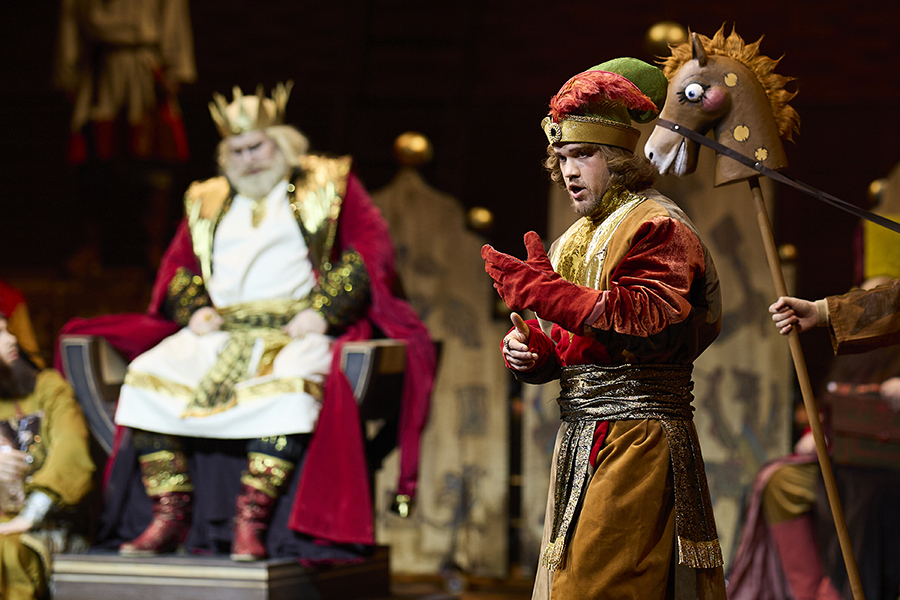
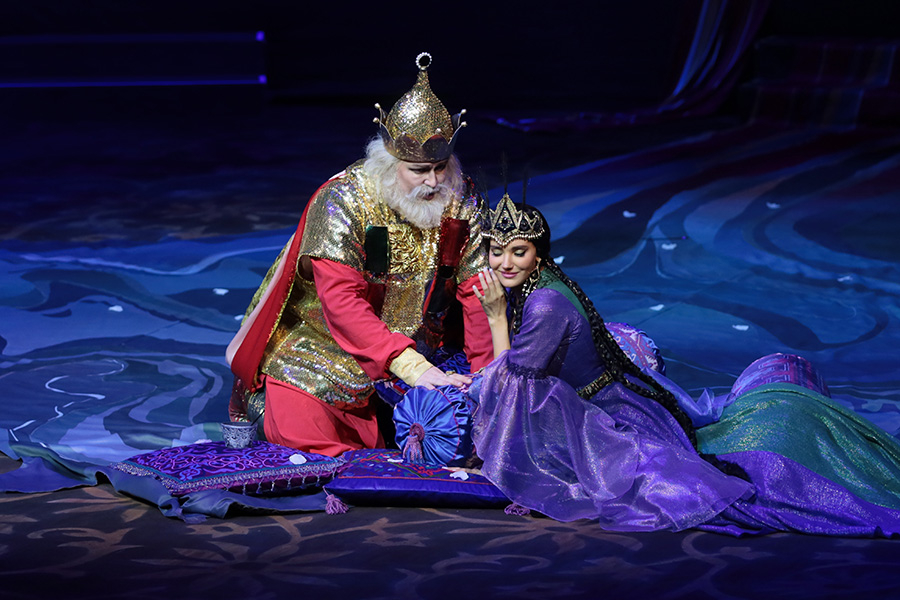
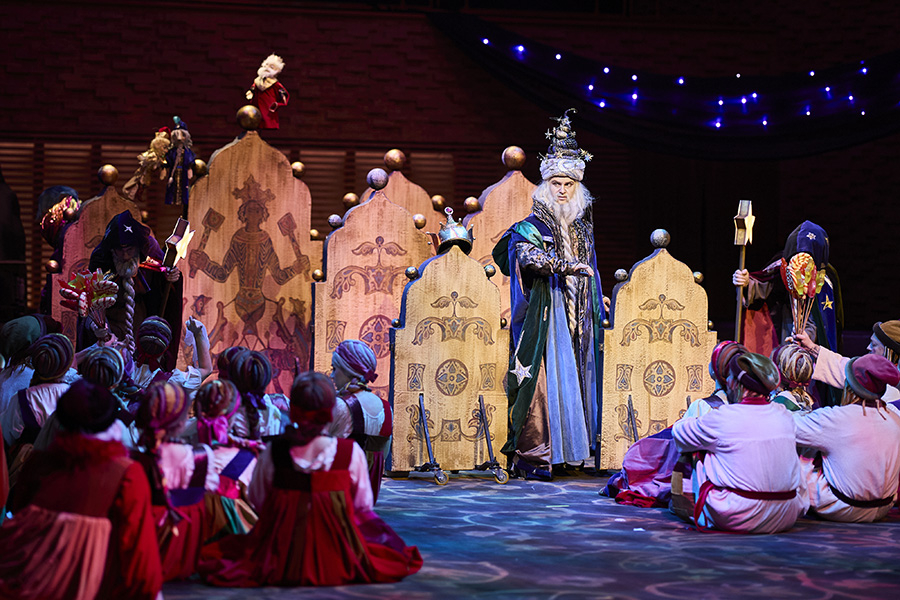
World premiere: 24 September 1909, Zimin Opera Company on the stage of the Solodovnikov Theatre, Moscow
Premiere at the State Mariinsky Theatre: 14 February 1919
Premiere of this production: 24 November 2025
Running time: 2 hours 30 minutes
The performance has one interval
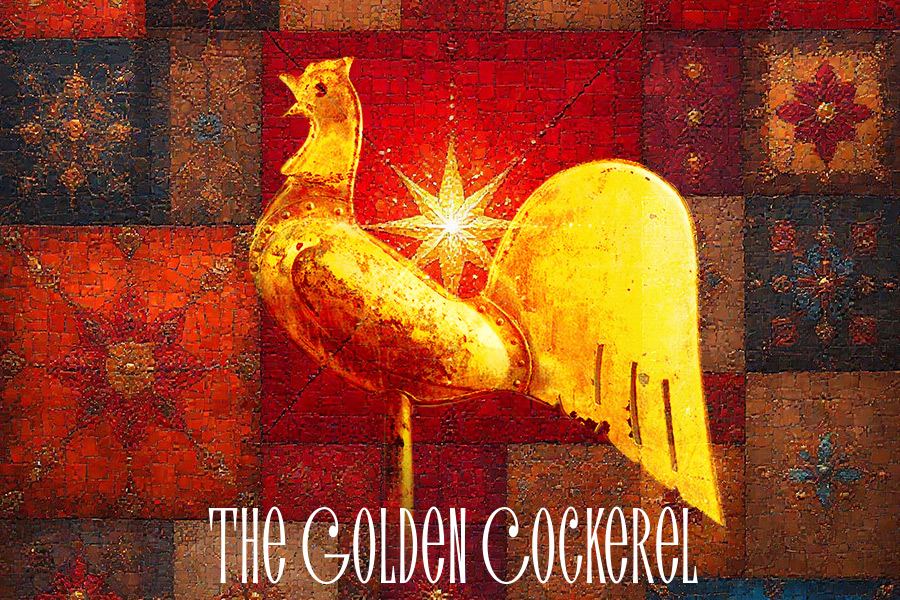
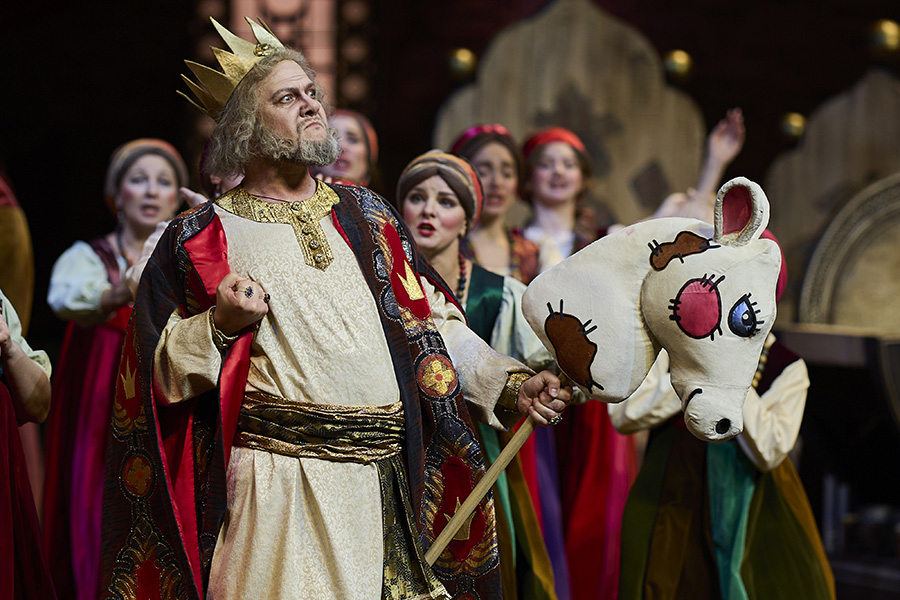
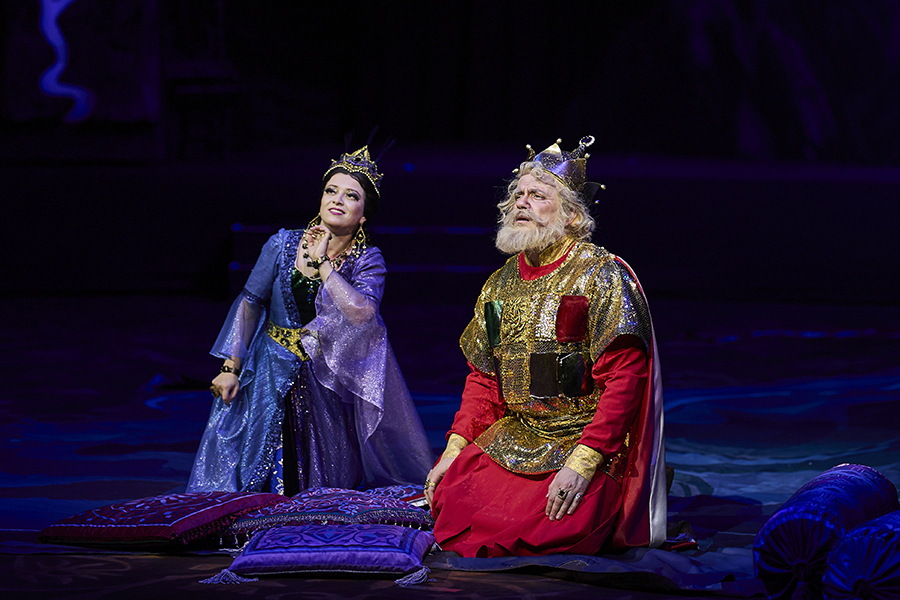
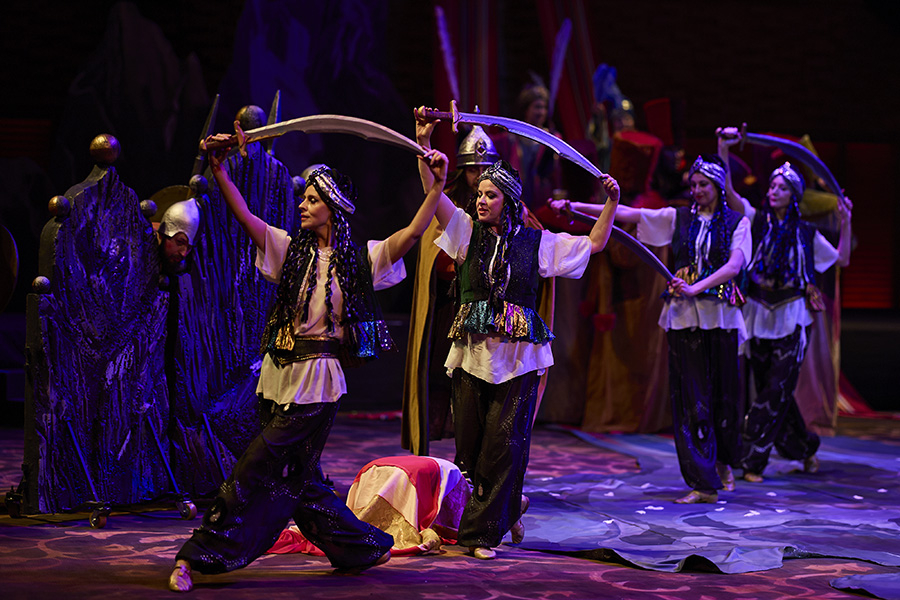
It is no coincidence that the word fairy tale disappeared from the title of Rimsky-Korsakov’s opera The Golden Cockerel: this is no fairy tale but a merciless musical-theatrical pamphlet. The Russo-Japanese War, the Revolution of 1905, student unrest and the composer–professor’s confrontation with the authorities form the historical and biographical backdrop against which this “fantasy play in acts” was created. Composed in 1907, The Golden Cockerel became not only Rimsky-Korsakov’s final opera but also the last work of the entire pre-revolutionary Russian school of composition – the same school that had once proclaimed its patriotic ideals in A Life for the Tsar.
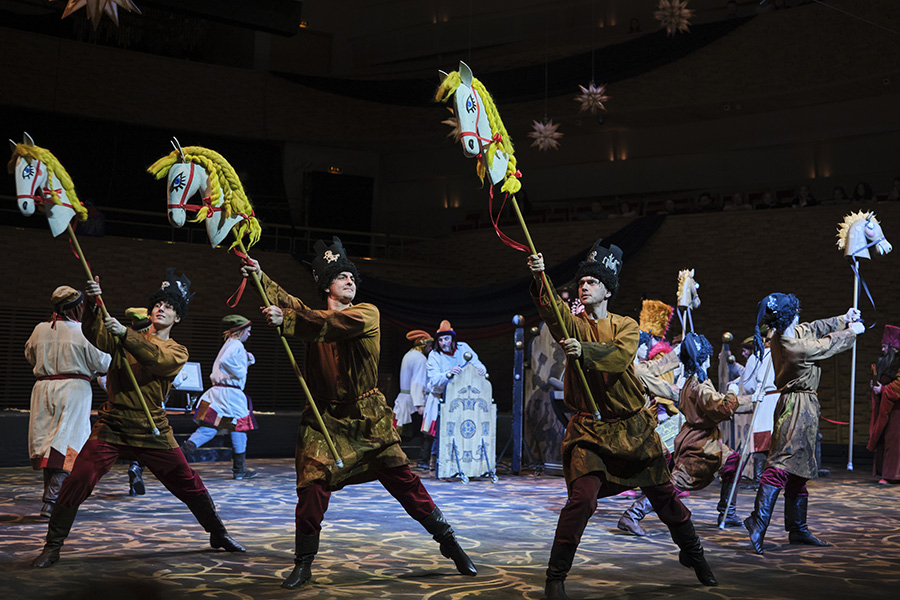
Rimsky-Korsakov formulated his intention in a famous phrase: “I hope to disgrace Dodon completely.” That meant going even further, with greater force and severity, than Pushkin’s original tale, reworked into an opera libretto by Vladimir Belsky. In The Golden Cockerel not only the Tsar – a “slave in body and soul” – is mocked but the entire structure of Russian statehood, including the Duma, the army and both foreign and domestic policy. The servile populace of Dodon’s kingdom exists solely for its ruler: “Without you we would not know why we live; for you we were born and founded families.” There is not a single worthy person in power; the state destroys itself, and the country’s future is unclear – such is the opera’s conclusion.
The nature of the subject determined the music of The Golden Cockerel, which the musicologist Boris Asafyev called “a dazzling mosaic of precious sonorities”. Though devoid of the psychological depth typical of romantic opera, the work is by no means lacking in emotion – its strongest feeling lies outside the score: the composer’s own anger and bitterness. The absurdity of events is expressed through parody; even an untrained listener easily recognises Chizhik-pyzhik and The Moon Shines, while the more discerning will notice numerous allusions to the Mighty Handful (including Rimsky-Korsakov himself), to Glazunov, to European musical decadence and to other “foreign words”.
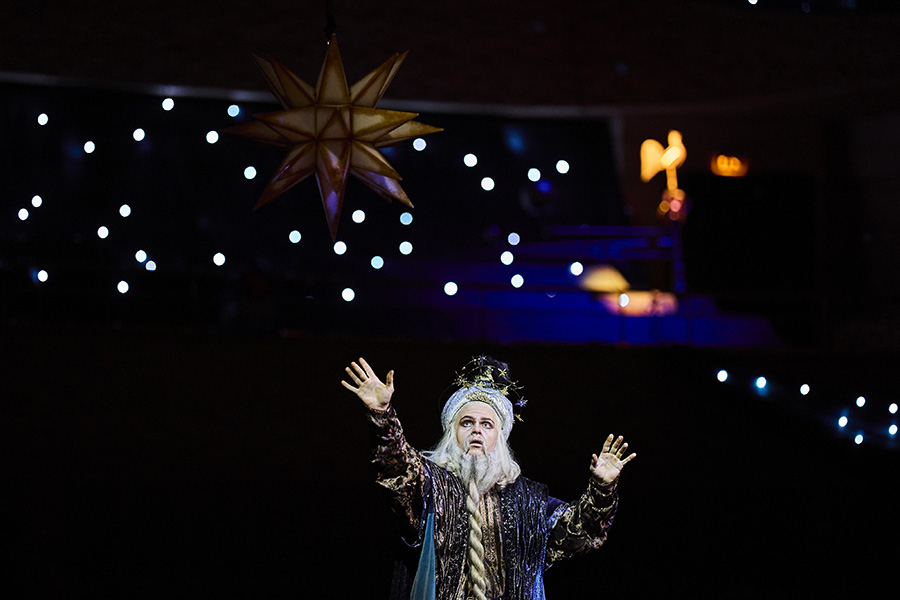
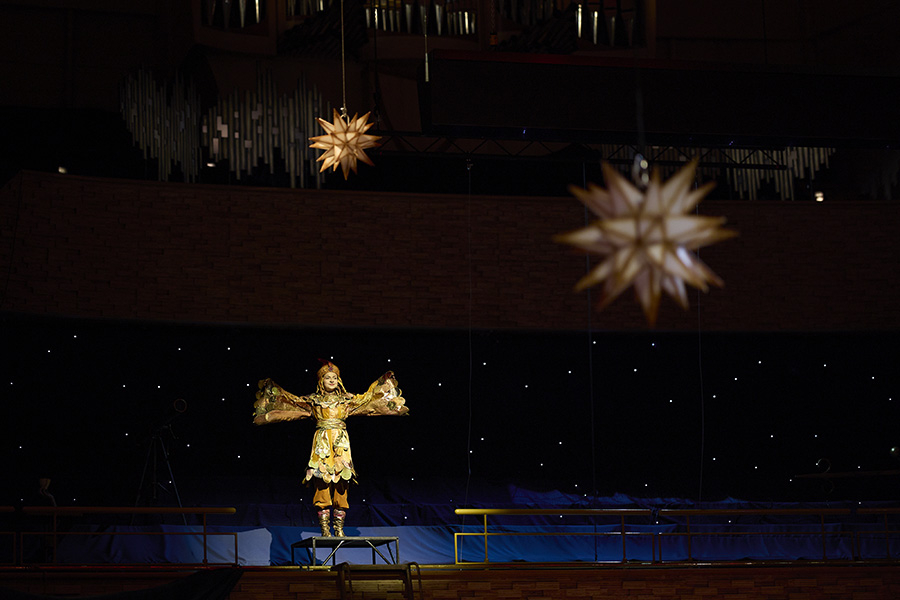
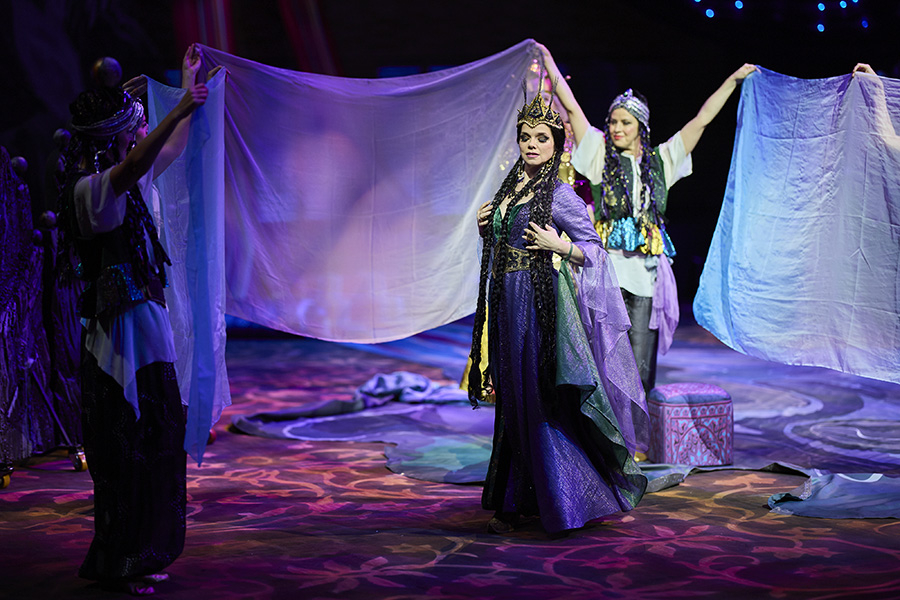
Summing up his artistic path, Rimsky-Korsakov in his last work suddenly reveals himself as a composer of the 20th century, close in spirit to Stravinsky and Scriabin. The Wagnerian continuity of the musical dramaturgy in The Golden Cockerel attains perfection in its chiseled symmetry: the trio of the Cockerel, the Astrologer and the Queen of Shemakha, with their magical music, stands opposed to Dodon’s realm with its domestic motifs. Yet in the epilogue all is overturned – we are told that only the Astrologer and the Queen were real, while the others were “dream and illusion”. Indeed, one cannot expect depth from caricatured figures: they are as flat as painted folk prints. But the opera’s orchestral palette is anything but flat – it is dazzlingly rich in colour, at times fiery and poster-like, at times refined and impressionistic. Khristina Batyushina





| user_name | | Exit |

The highlighting of performances by age represents recommendations.
This highlighting is being used in accordance with Federal Law N436-FZ dated 29 December 2010 (edition dated 1 May 2019) "On the protection of children from information that may be harmful to their health"


