


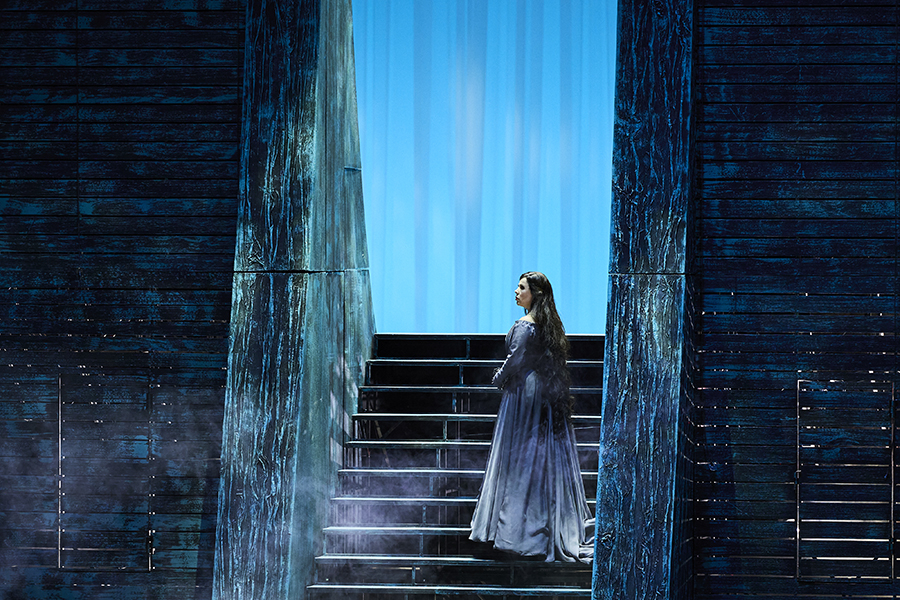
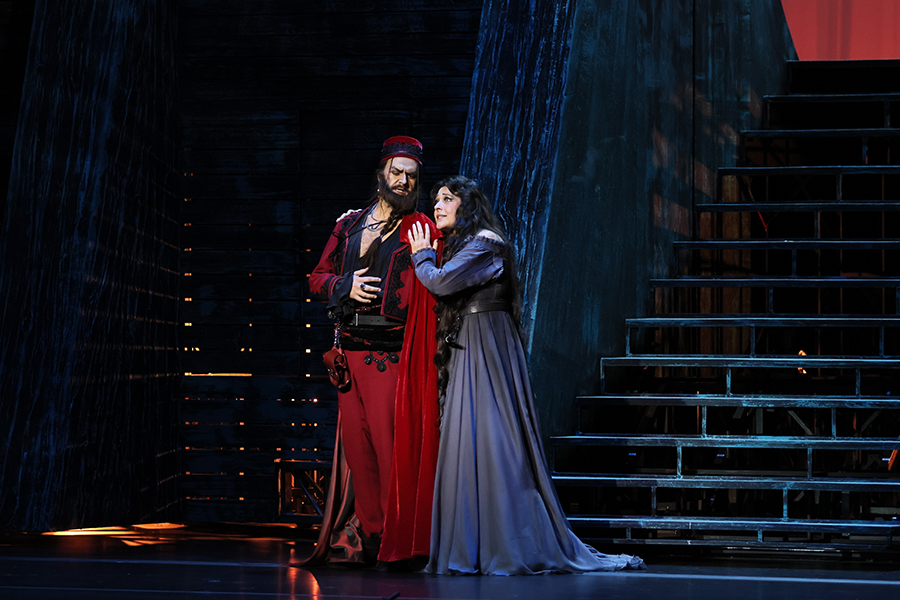
La Gioconda

opera by Amilcare Ponchielli

Performed in Italian (the performance will have synchronised Russian supertitles)
 

World premiere: 8 April 1876, Teatro alla Scala, Milan
Premiere at the Mariinsky Theatre: 18 January 1888
Premiere of this production: 3 July 2026


Running time: 3 hours 25 minutes
The performance has one interval

Age category: 12+

Credits

Music by Amilcare Ponchielli
Libretto by Tobia Gorrio (Arrigo Boito) based on the play Angelo, Tyrant of Padua by Victor Hugo

Musical Director: Valery Gergiev
Stage Director: Orlin Anastasov
Set and Costume Designer: Denis Ivanov
Lighting Designer: Anatoly Lyapin
Musical Preparation: Grigory Yakerson
Chamber Chorus Master: Pavel Teplov
Choreographer: Alexander Sergeev

SYNOPSIS

Act I. The Lion’s Mouth
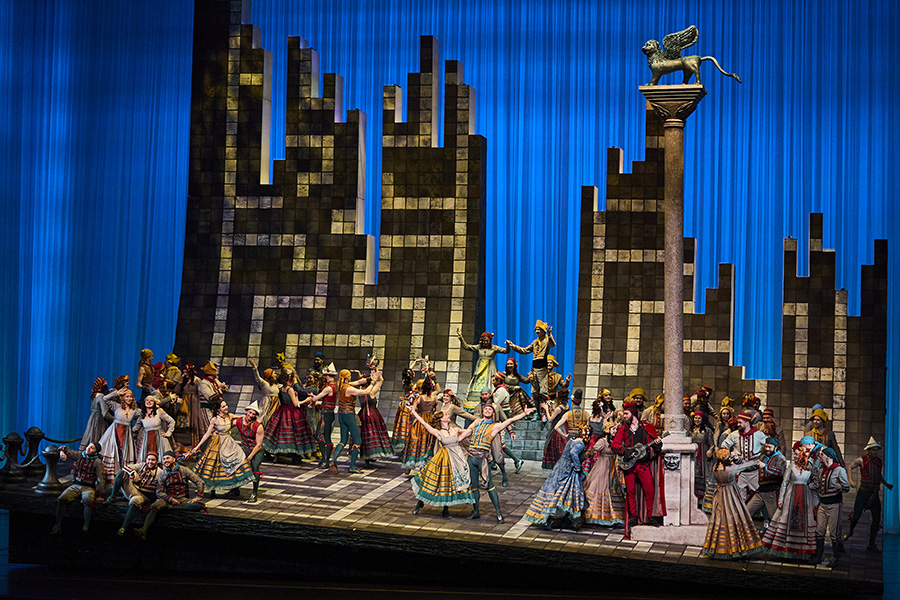
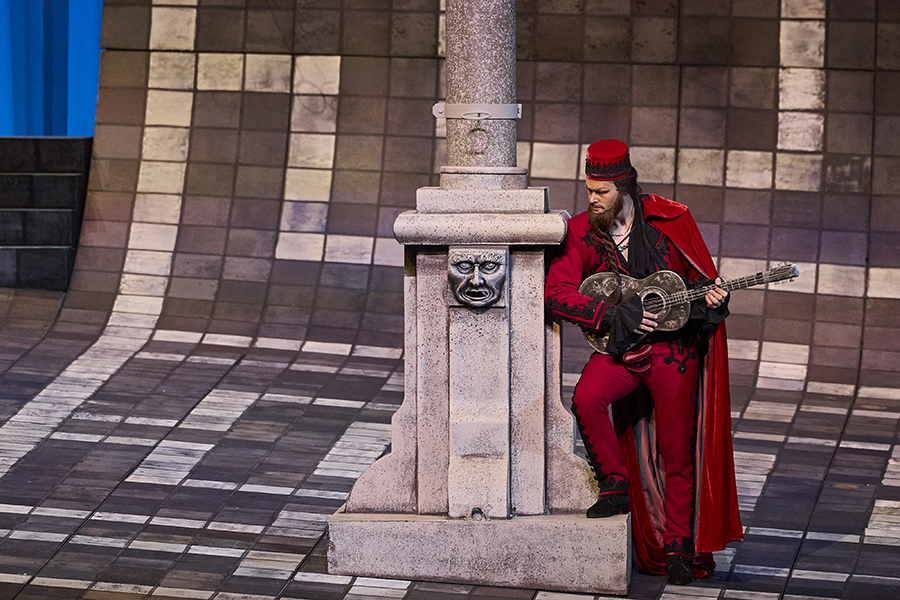
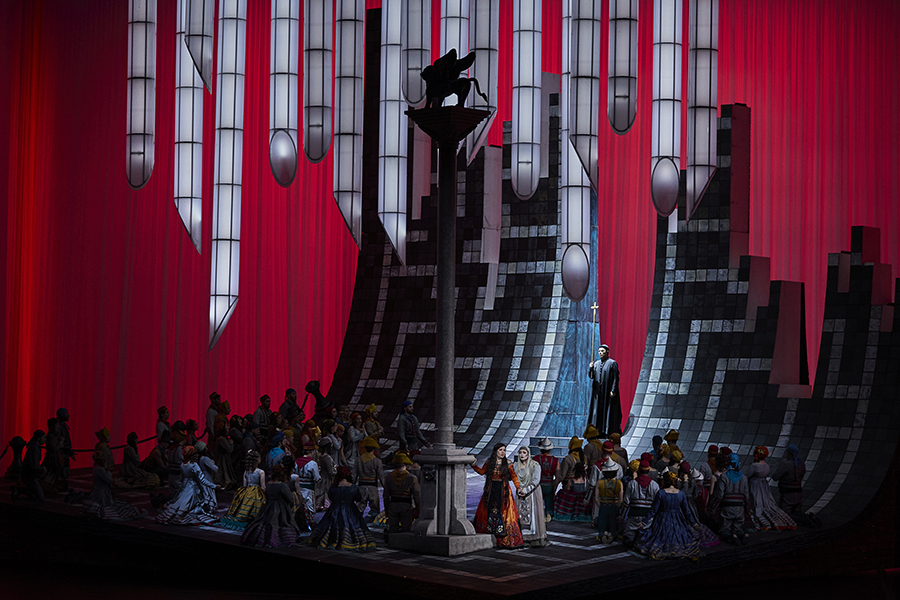
Venice, 17th century. The great courtyard of the Doge’s Palace. Above the image of a lion’s head with gaping jaws is carved the inscription: “For secret denunciations, addressed to the Holy Inquisition, concerning persons who threaten the security of the state.” The courtyard is filled with a festive crowd. Disguised as a street musician, Barnaba, a spy of the Inquisition, watches the scene. The start of the regatta – a rowing race – is announced, and the crowd rushes towards the Grand Canal, where the contest is to take place.

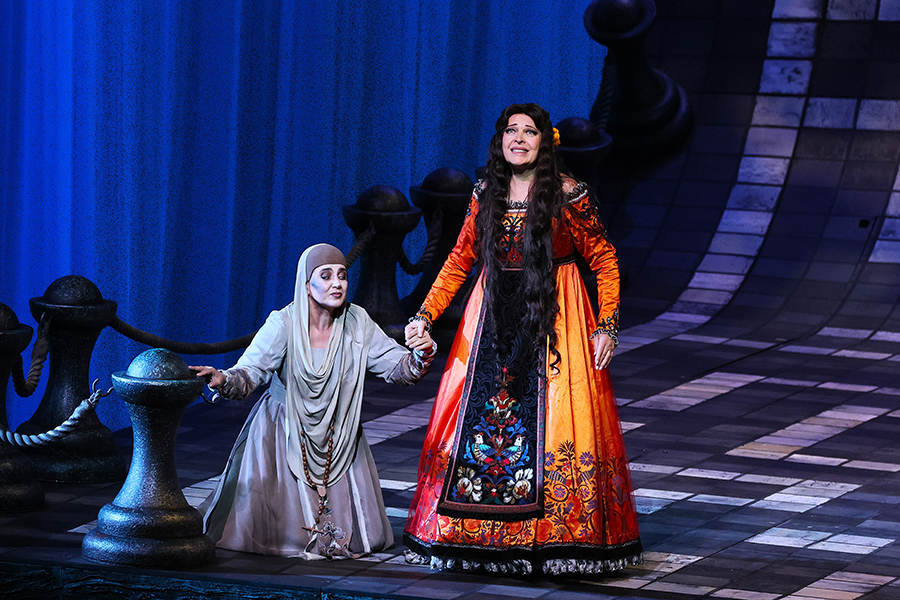
A street singer known as Gioconda – “the Joyful One” – appears, leading her blind mother, La Cieca, by the hand. Barnaba is in love with Gioconda, but she has rejected him. She loves the young nobleman Enzo Grimaldo, who has been banished from Venice by the authorities and has now slipped back into the city disguised as a Dalmatian skipper. Seeing Gioconda, Barnaba again declares his love, and again in vain: the girl runs away. Embittered, Barnaba conceives a treacherous plan. By dishonouring the mother, he will force the daughter to submit.

The regatta is over. The crowd returns to the courtyard, hailing the winner. With them come Zuàne (the defeated gondolier), Gioconda and Enzo. Barnaba whispers to Zuàne that the cause of his defeat was the witchcraft of the old sorceress La Cieca. The gondolier and his friends turn on the poor old woman. Enzo and his sailors come to her defence.

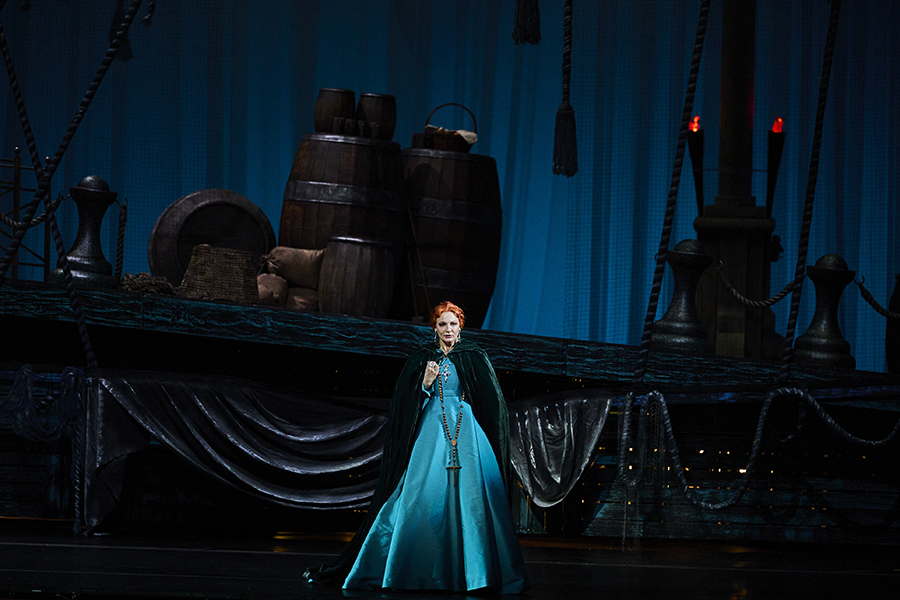
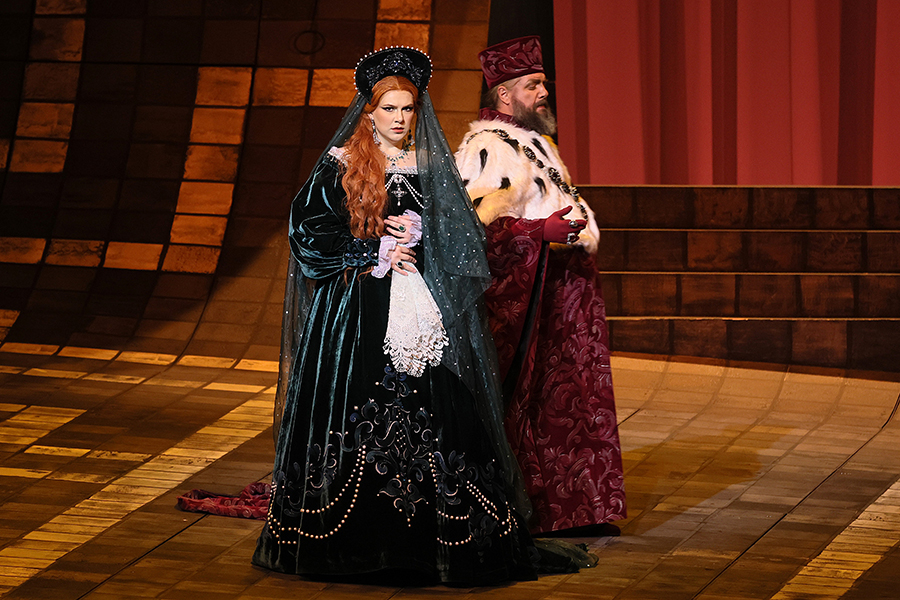
Suddenly one of the Venetian inquisitors, Duke Alvise Badoero, appears with his wife Laura, whose face is hidden behind a mask. Gioconda falls to her knees before the inquisitor and begs him to save her mother from the fury of the crowd. Laura joins in the girl’s plea. Alvise orders everyone to disperse and to let the old woman go in peace. La Cieca thanks Laura, gives her a rosary and blesses her. She wishes to know the name of her saviour. Alvise’s wife replies: “Laura.” “It is she,” Enzo whispers. Laura fixes her gaze on the young captain. Barnaba notices everything. The spy knows Grimaldo’s past well. He knows that Enzo was once betrothed to Laura, but that she was forced to marry Alvise – and that the lovers have not seen each other since. To win Gioconda’s favour, Barnaba intends to blacken the man she loves in her eyes. To this end he promises Enzo that he will bring Laura to his ship that night and help him carry her away from Venice. Enzo leaves.

Barnaba summons his assistant, the street scribe Isèpo. At that moment Gioconda and her mother come out of the church. Seeing the hateful Barnaba, they hide. The girl overhears the spy dictating a letter warning an unknown man that his wife plans to flee with Grimaldo that very night. Realising that Enzo does not love her, Gioconda bitterly pours out her grief to her mother. La Cieca tries to comfort her daughter.

Act II. The Rosary
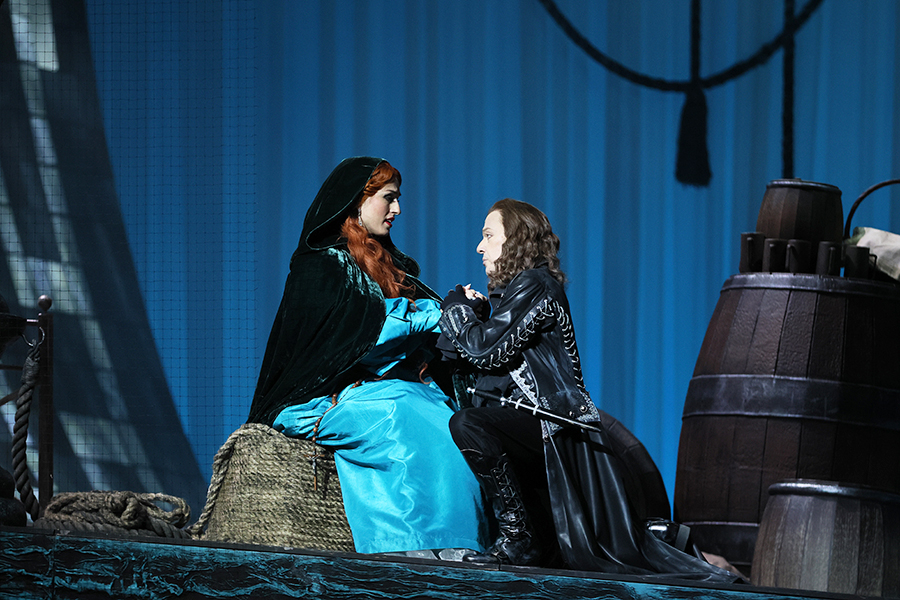
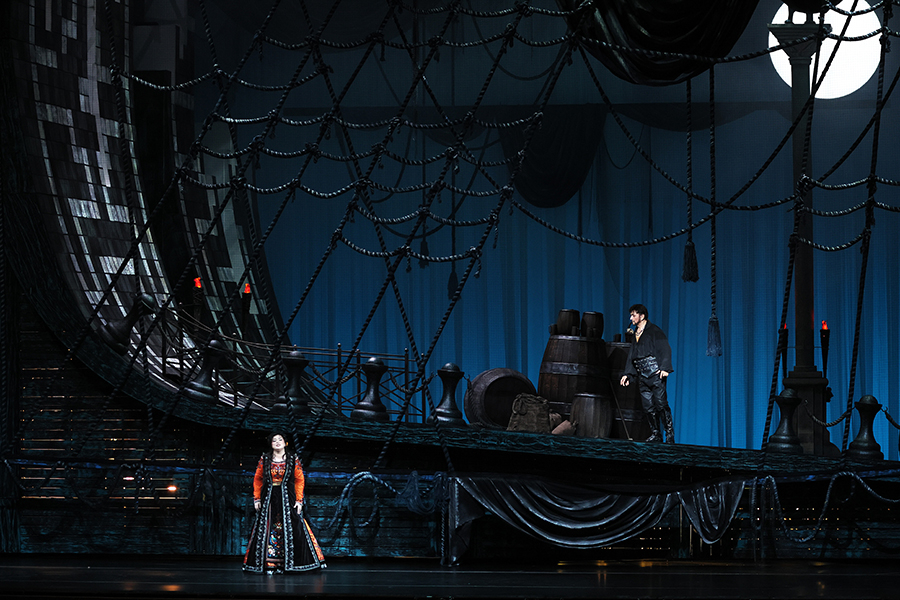
At a deserted shore of the lagoon lies Enzo’s brigantine, Hecate. A boat approaches: Barnaba, as promised, has brought Laura. The lovers are overjoyed. Enzo goes off to give orders to the crew, leaving Laura alone. Gioconda appears, intent on killing her rival.

Suddenly she notices the rosary that her mother had given Laura and recognises in her La Cieca’s saviour. In the distance a galley appears in the lagoon: Alvise and his soldiers are approaching the ship. Gioconda quickly calls to the boatmen who brought her to the brigantine and offers Laura a chance to escape. When Barnaba climbs aboard Hecate, Laura is already gone. The spy hurries to the Duke and points to the receding boat. The galley sets off in pursuit. Enzo appears on the deck of the brigantine. Gioconda tells him what has happened. Their explanation is interrupted by the sight of a warship in the lagoon. Enzo sets fire to Hecate, leaps into the water and swims away. The crew of the burned brigantine and Gioconda remain on the island of Giudecca.

Act III. The Golden House
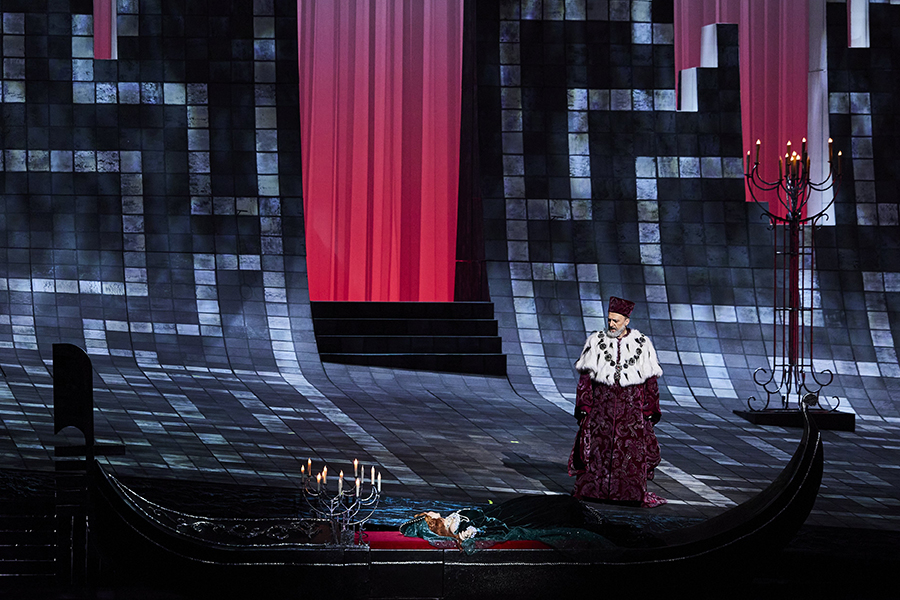
The Duke’s palace, known as the Golden House. Alvise has resolved to put his unfaithful wife to death. He orders Laura to be brought to him. When she arrives, the Duke points to a funeral bier and gives her a vial of poison: Laura must drain it. As soon as Alvise leaves, Gioconda appears. She has brought Laura a powerful sleeping potion in place of the poison. Laura drinks it.

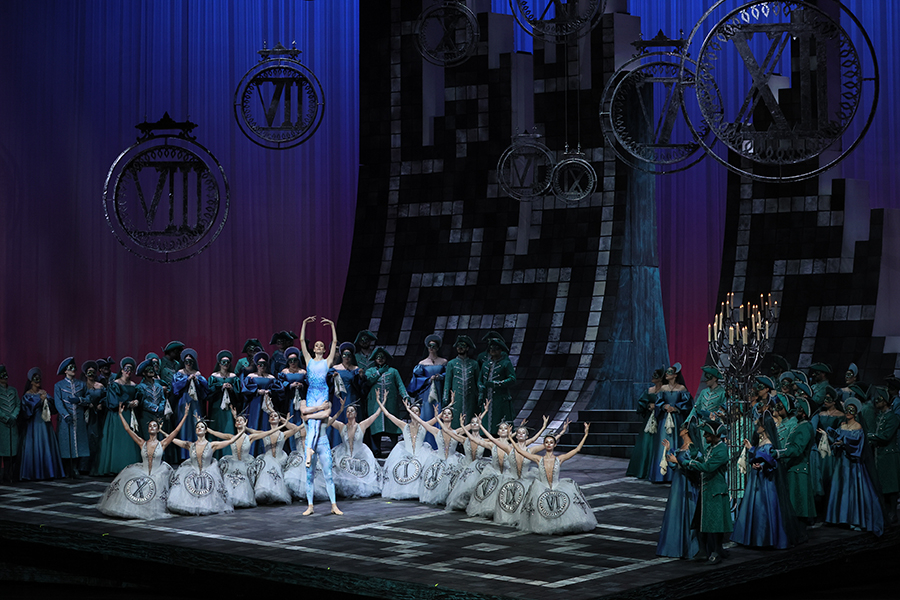
Alvise entertains his guests with a ballet, Dance of the Hours. From the waters of the canal a pair of fantastical beings suddenly emerges. Their dance fills everyone with wonder. Enzo, too, is secretly among the guests.

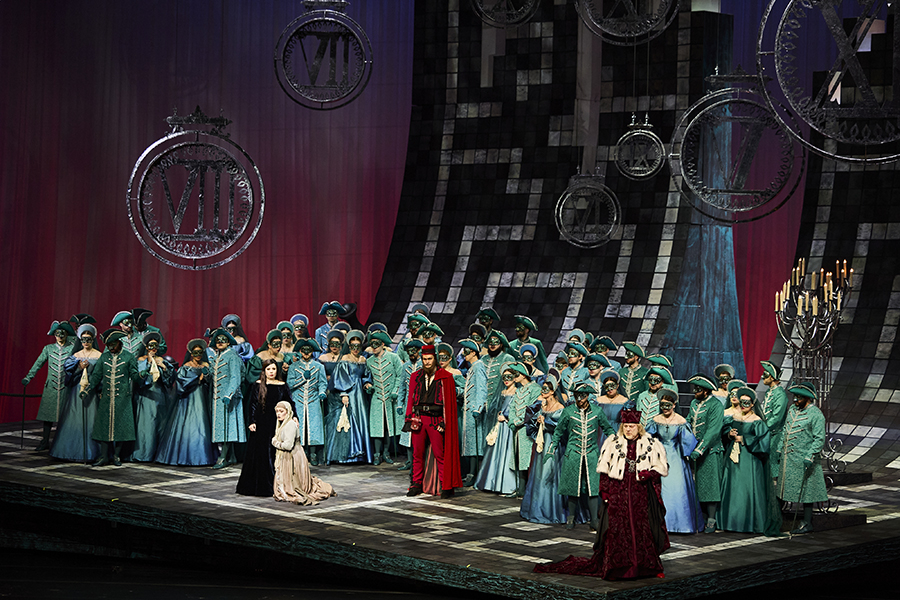
Barnaba enters, dragging La Cieca with him. Asked by the Duke why the old woman has come to the palace, La Cieca replies: “To pray for the dead.” Silence falls over the hall. Funeral bells are heard. “Who is being buried?” Enzo asks. In answer Alvise points to Laura’s motionless body. The guests recoil in horror. Enzo rushes at the Duke, but the guards seize him.

Act IV. The Orfano Canal
On a deserted island, beside a ruined palace, Gioconda grieves. She has promised herself to Barnaba if he frees Enzo from prison and brings him to a place of safety: the Orfano Canal. Gioconda’s helpers appear, carrying the sleeping Laura in their arms, wrapped in a dark cloak. Laura is taken inside the palace.

Grimaldo enters. The singer tells him that, on her orders, Laura’s body has been stolen from the crypt. Enzo is ready to attack Gioconda with a dagger, but at that moment the voice of the awakened Laura is heard. She calls to Enzo and tells him everything. There is no time to lose: a boat is waiting to carry the lovers to safety. Gioconda remains alone.

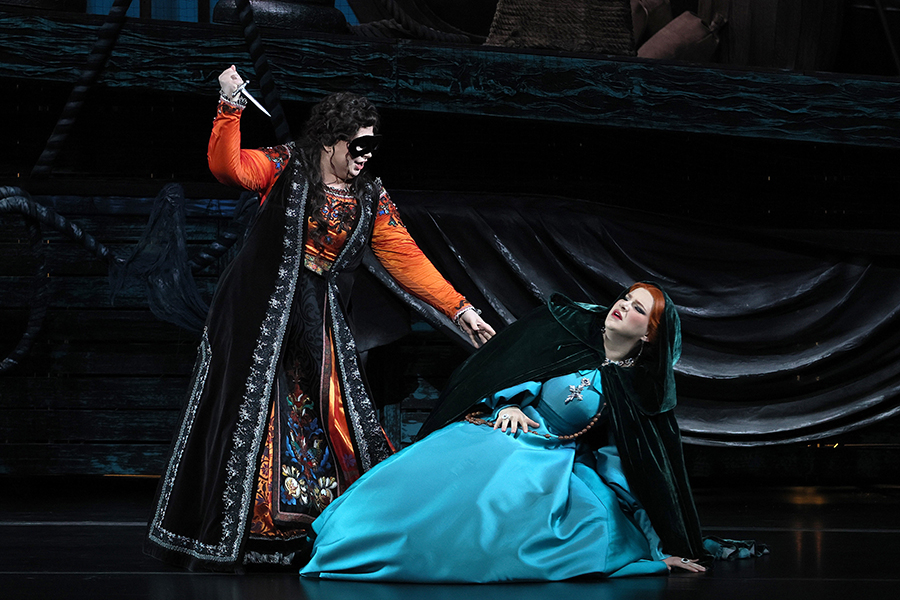
Barnaba appears. The singer seizes a dagger and, with the words “Take my body!”, stabs herself. In fury, Barnaba cries out that the night before he drowned Gioconda’s mother. But Gioconda can no longer hear him.

The composer Amilcare Ponchielli (1834–1886) spent many, many years approaching his most important creation – the opera La Gioconda. He had to compose six operas and several ballets which brought him no serious success before Giulio Ricordi took an interest in him. The largest publisher and impresario in Italy was looking for a replacement for Giuseppe Verdi who had fallen silent. As a candidate for the vacancy of “the new Verdi”, Ponchielli received a commission to write the opera I Lituani (1874). I Lituani was followed by La Gioconda. Its premiere at the Teatro alla Scala in Milan on 8 April 1876 brought the composer long-awaited glory.

The basis of the libretto of La Gioconda came with Victor Hugo’s play Angelo, tyran de Padoue (1835). The playwright and composer Arrigo Boito, in the future Verdi’s librettist, changed the names of the characters and transferred the action from Padua to Venice in the 17th century. Thus, too, the sea and a carnival appeared in the opera. Boito allocated each of the four acts vivid titles: “The Lion’s Mouth”, “The Rosary”, “The Ca’ d’oro” and “The Orfano Canal”. He opened the choral introduction with Juvenal’s famous phrase “Pane e circenses!” (“Bread and circuses!”), while Laura’s prayer from Act III is a quotation from the medieval hymn of the Mother of God Hail, Queen of the Sea. The libretto presented Ponchielli with rich opportunities. The first two acts of La Gioconda open with scenes of the sea – a regatta on the Venetian Lagoon and a song of the sailors onboard Enzo’s ship. The carnival is present almost uninterruptedly throughout the opera.

It is against such a rich background that the battle between the heroine, a singer known as Gioconda (from “la gioconda”, Italian for “the merry one”), and the villain Barnaba, a spy of the inquisition, unfolds. Their themes, which emerge in the orchestral prelude, run throughout the entire work.

In terms of genre, La Gioconda is a “grand opera” in the style of Aida, with the romantic weaving of fateful passions, jealousy, envy and imaginary and actual murders. The complex ensembles and choruses, the confessional arias and the ballet numbers (the famous Dance of the Hours) make it attractive for the public and it is favoured by singers. La Gioconda has inexplicably long been absent from the St Petersburg stage, and it is intended for this performance to fill the gap. Audiences will find it hard to refrain from comparing Gioconda with other verist actresses – Tosca and Adrienne Lecouvreur, ruined in the prime of their lives by the characters of the eponymous operas from the late 19th and early 20th centuries. Anna Bulycheva

Any use or copying of site materials, design elements or layout is forbidden without the permission of the rightholder.
user_nameExit

The highlighting of performances by age represents recommendations.

This highlighting is being used in accordance with Federal Law N436-FZ dated 29 December 2010 (edition dated 1 May 2019) "On the protection of children from information that may be harmful to their health"