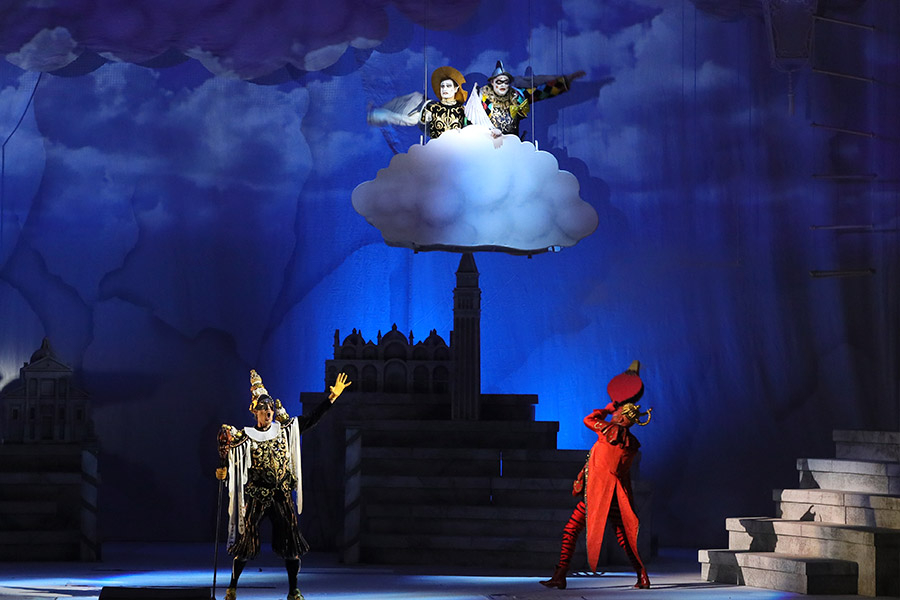
Prologue. Parade of the Characters
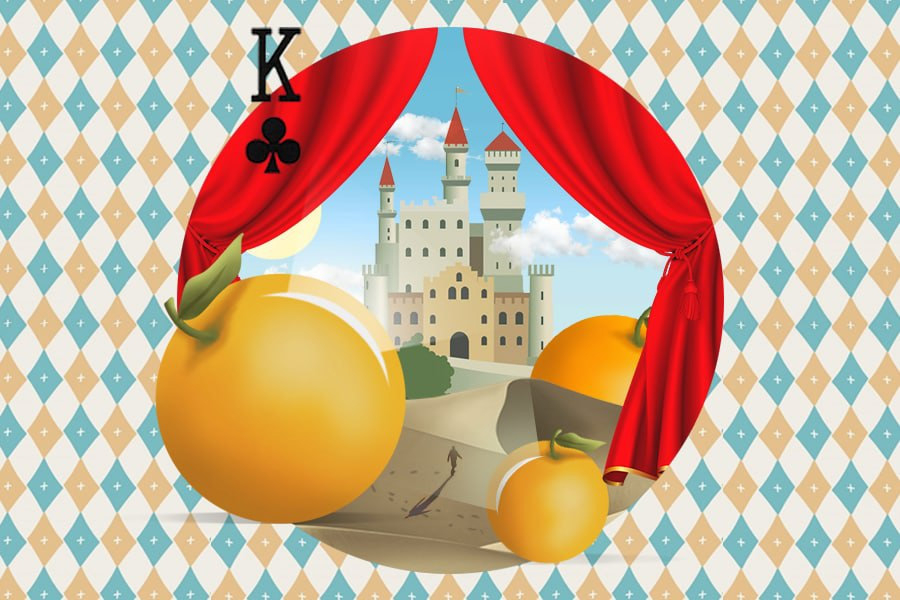
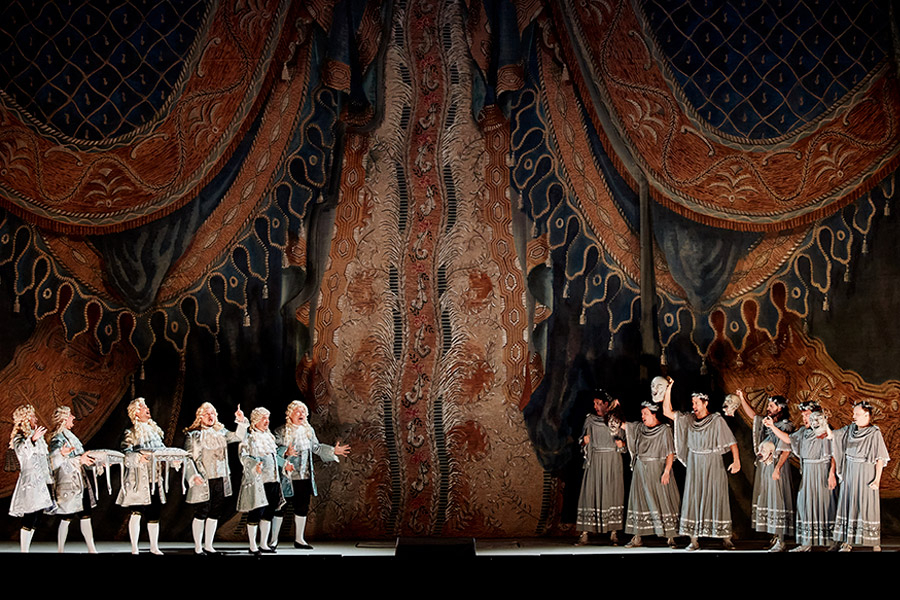
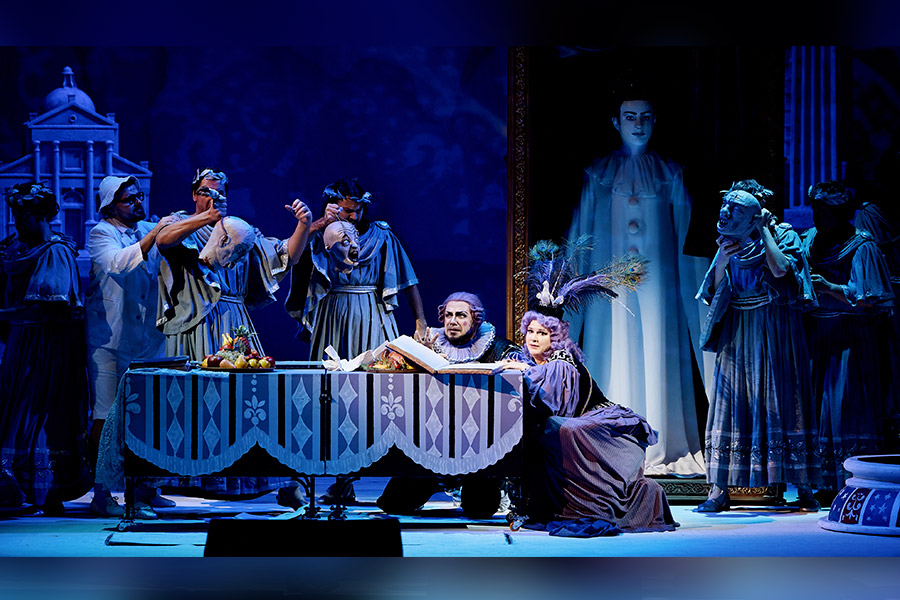
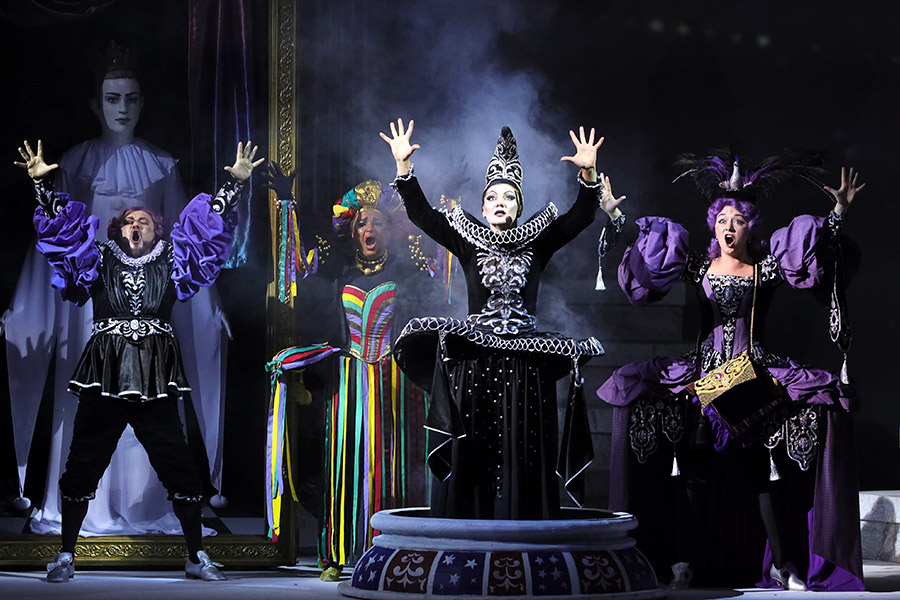
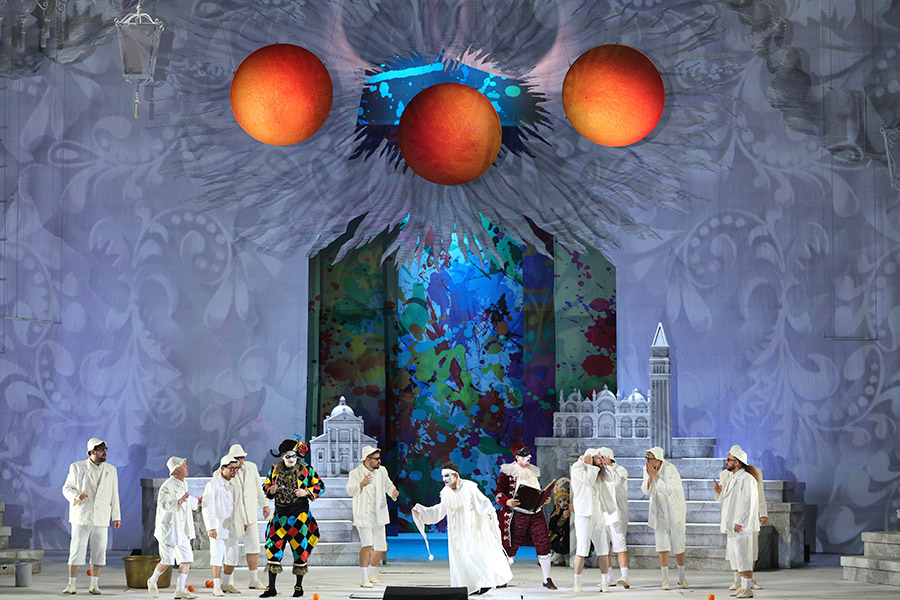
Everything begins unexpectedly: the Tragedians clash with the Comedians, while the Lyric Poets dream of romantic love and the Empty-Headed demand farce and amusing trifles. The quarrel sways from one side to the other until the Oddballs appear, shovel the fighters apart, and with great delight proclaim the beginning of an “unparalleled” spectacle entitled The Love for Three Oranges.
Part One
First Attraction. The Royal Council
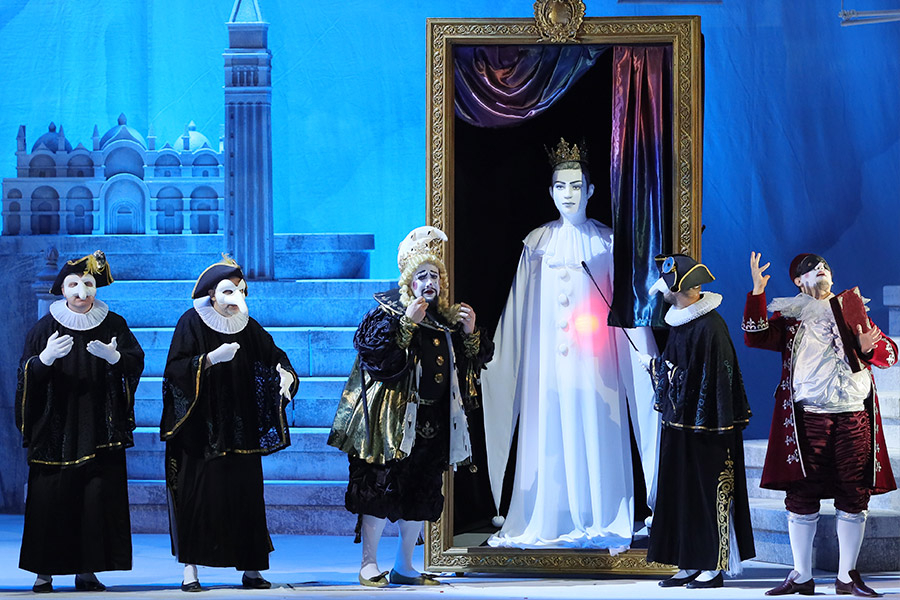
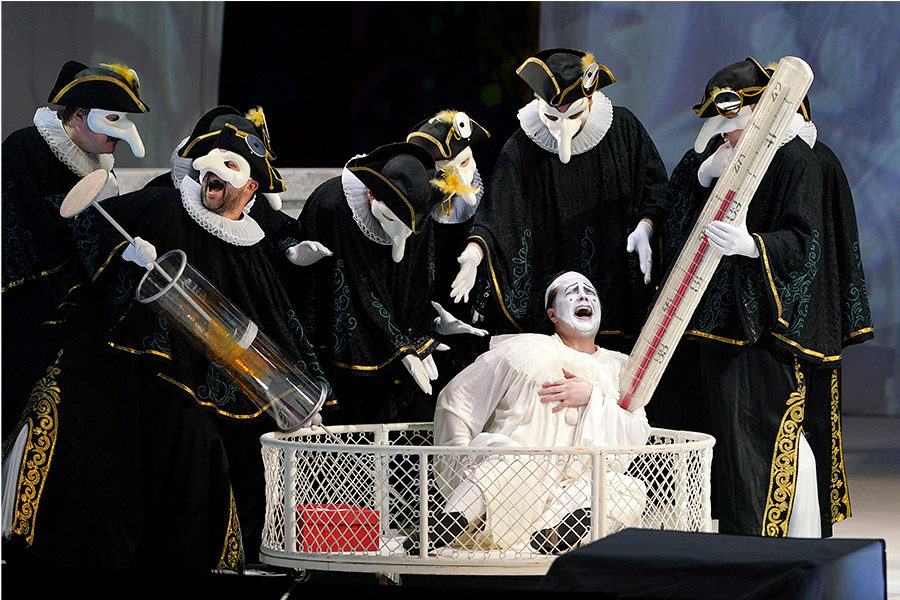
Gloom reigns in the palace. The physicians deliver a terrible diagnosis: the Prince suffers from an incurable “hypochondriacal condition”. The King despairs and bursts into tears, as does his attendant Pantalone. Yet the physicians believe that laughter may cure the Prince.
Pantalone loudly summons Truffaldino, a master of comic entertainment. The King orders him to arrange a festive masquerade. He gives the same command to the First Minister Leander, who barely conceals his irritation – he secretly longs for the Prince’s death. The Oddballs enthusiastically support the King’s decision.
Second Attraction. The Magical Duel
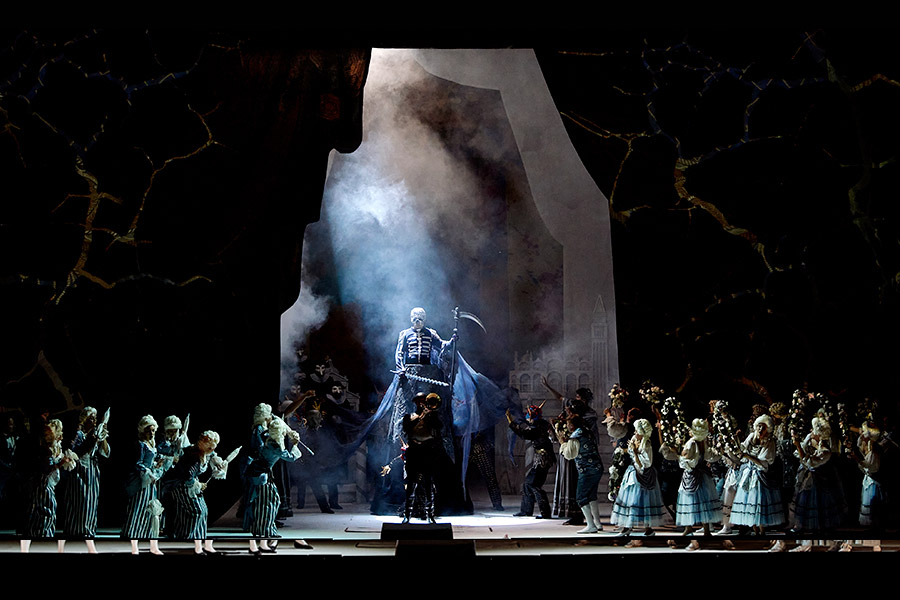
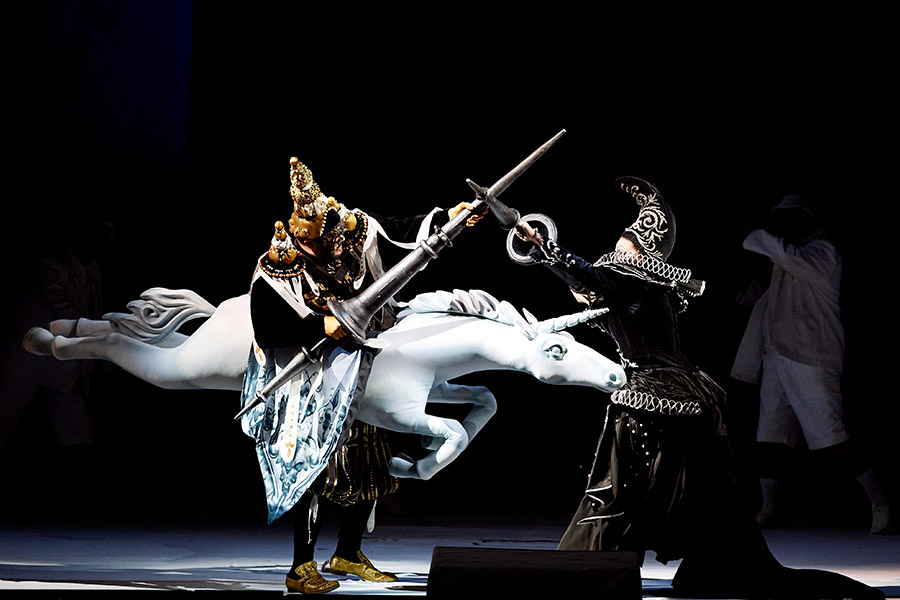
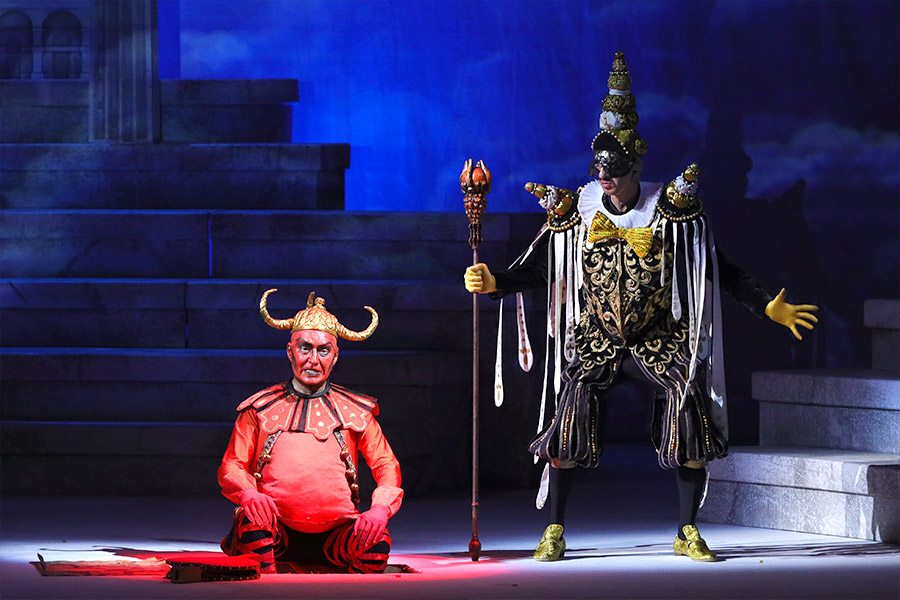
Darkness envelops everything. With thunder and lightning, the magician Tchelio rises from the ground. Beside him stands Fata Morgana, surrounded by fire and smoke. The Oddballs watch in amazement.
The magicians begin with a game of cards, which turns into a knightly duel resembling an ordinary brawl. Tchelio loses.
Third Attraction. The Minister’s Plot. A Black Magic Ritual
At court Princess Clarice meets Leander. They discuss their plan to kill the Prince: Clarice will become heir, and Leander, after marrying her, will take the throne. Leander reveals that he has long tormented the Prince with tragic prose and heavy verse, hoping to drive him to death.
The Tragedians suddenly burst in, shouting for “High Tragedy! Lamentations! Murders!” The Oddballs sweep them away again. Clarice demands more decisive means – poison or a bullet.
A procession of servants led by Truffaldino enters with comic props for the celebration. A vase falls; Leander discovers Smeraldina hiding nearby. She reveals that Tchelio supports Truffaldino, while Fata Morgana stands ready to aid Leander. Alarmed, the conspirators summon the witch.
Fourth Attraction. The Prince’s Cure. Clowning
Truffaldino and the Oddballs struggle to amuse the Prince, who sits wrapped in a cloak, surrounded by bottles and remedies, complaining of endless ailments.
Truffaldino invites him to the festivities. Comedians rush in demanding laughter; the Oddballs drive them away. Music announces the beginning of the celebration, yet the Prince refuses to move.
Finally, Truffaldino throws out the medicines and physicians alike and forces the protesting Prince to the spectacle.
Fifth Attraction. The Old Woman’s Curse. Bacchanalia
The court gathers in the palace courtyard. Truffaldino opens the show. The audience delights in grotesque entertainments, yet the Prince remains unmoved.
Fata Morgana appears disguised as a decrepit old woman. During the next spectacle she falls awkwardly – and suddenly the Prince bursts into laughter.
Darkness falls. Fata Morgana rises and pronounces her curse: the Prince must fall in love with three oranges and pursue them day and night.
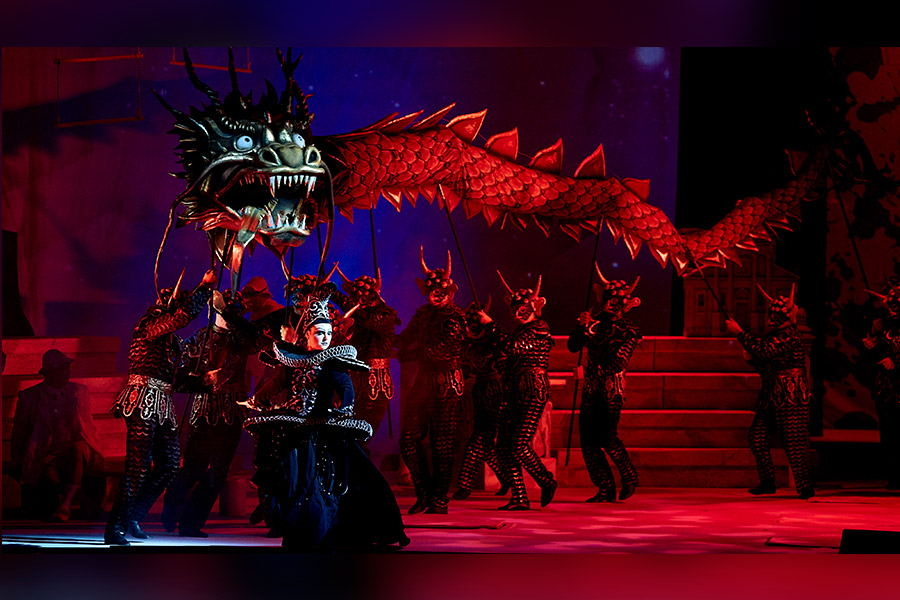
Seized by passion, the Prince sets out at once, ignoring both danger and his father’s command. The devil Farfarello blows him and Truffaldino away. The King collapses in despair.
Part Two
First Attraction. The Magic Ribbon. Summoning the Spirits
In the desert Tchelio summons Farfarello, who drives the Prince toward the castle of Creonta, where death awaits him.
Tchelio warns the travellers of danger and gives Truffaldino a magic ribbon: it may charm the Cook who guards the oranges. He also warns that the fruit must only be opened near water. Farfarello drives them onward.
Second Attraction. At Creonta’s Castle
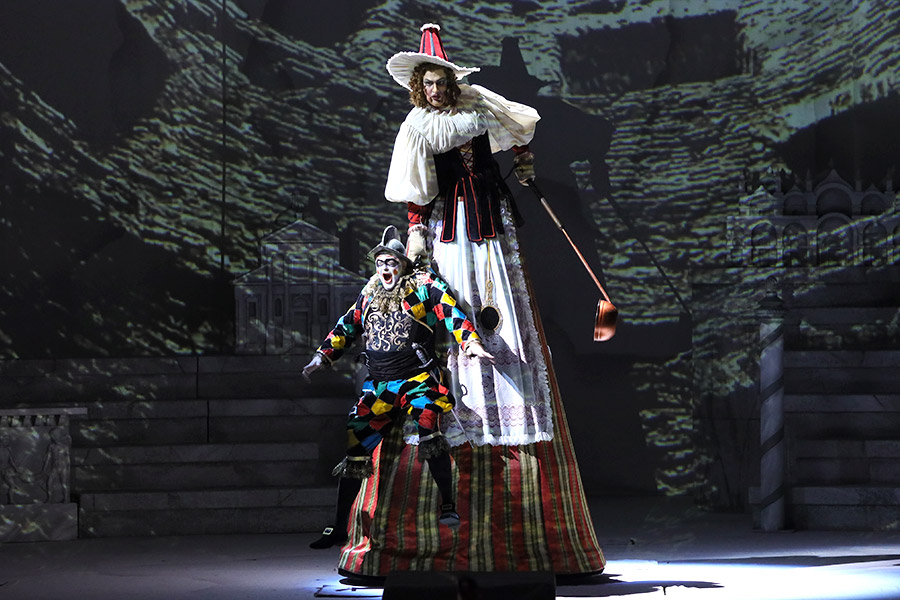
The travellers reach the castle. Though terrified, they approach the kitchen. The Cook appears with a huge ladle and seizes Truffaldino.
The magic ribbon distracts her. Meanwhile the Prince steals three enormous oranges. Truffaldino escapes and follows him.
Third Attraction. The Secret of the Three Oranges. White Magic
Back in the desert, exhausted and thirsty, Truffaldino cuts open one orange. Instead of juice, a princess – Linetta – appears, also dying of thirst. The same happens with the second orange and Princess Nicoletta. Both perish without water.
The Prince awakens, discovers them, and orders soldiers to carry away the bodies. He opens the third orange. Princess Ninetta appears. She weakens from thirst, but the Oddballs bring water and save her.
While the Prince goes to fetch royal garments, Smeraldina, urged by Fata Morgana, drives a magic pin into Ninetta’s head. The princess turns into a rat and vanishes. Smeraldina takes her place.
The Prince rejects the impostor, but the King insists: he must marry her. The procession departs.
Fourth Attraction. The Battle on Water. Clowning
Tchelio and Fata Morgana confront one another again. A fantastical battle unfolds. The Oddballs capture Fata Morgana, allowing Tchelio to act.
Fifth Attraction. Transformation. Trickery
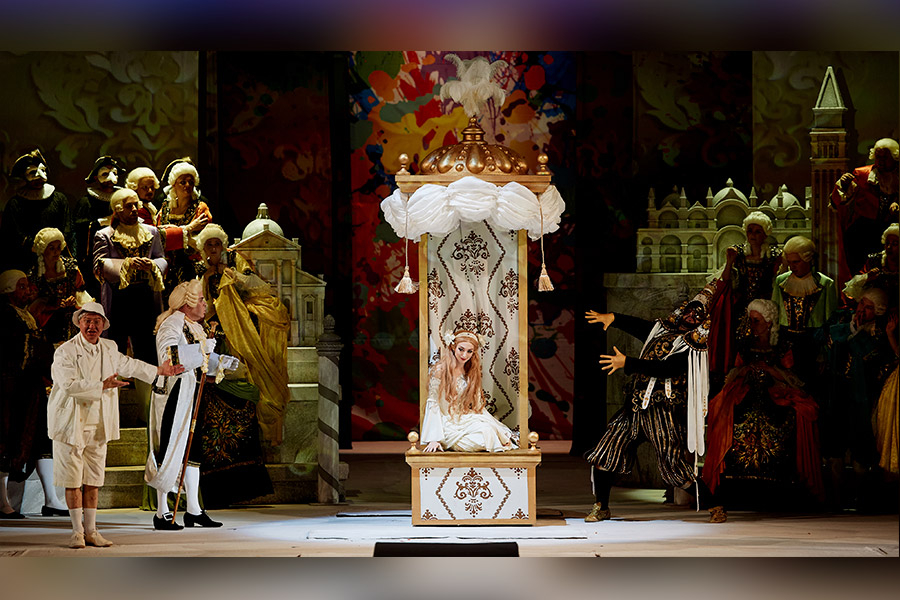
In the palace hall three thrones stand ready. The procession enters.
On the throne sits a giant rat. Tchelio appears and commands it to transform back into Ninetta. Soldiers fire – and Ninetta reappears.
The Prince rushes to her. The King understands everything and orders the conspirators punished. They flee, aided by Fata Morgana.
The palace fills with celebration. All acclaim the King, the Prince and the princess.
Epilogue
None.
Director’s version by Alexander Petrov